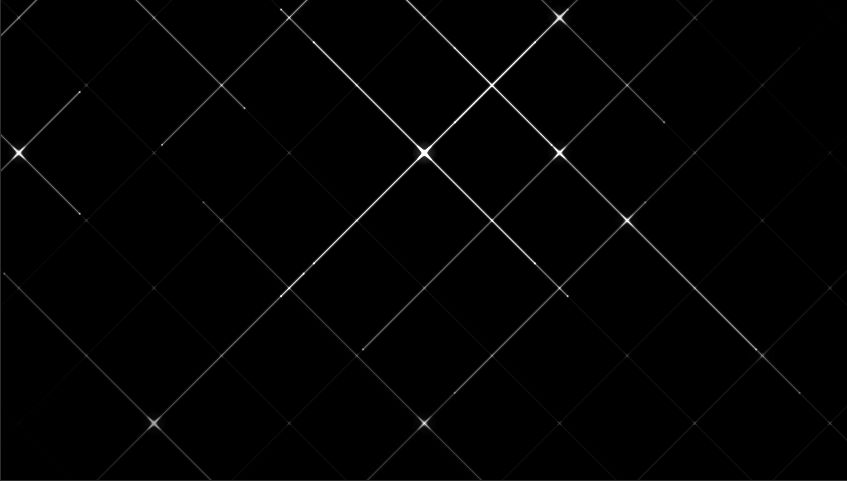
Noise BackgroundA canvas-based grain background of randomly scattered dots that illuminate with a soft Gaussian glow and organic connection lines on hover.
BackgroundsCanvasInteractive
Switch to light
Refresh
Full screen
Noisehover to illuminate
'use client'
import { useLayoutEffect, useEffect, useRef, useState } from 'react'
const useIsomorphicLayoutEffect = typeof window !== 'undefined' ? useLayoutEffect : useEffect
// ─── Config ───────────────────────────────────────────────────────────────────
const DENSITY = 1 / 120 // denser grain
const MAX_DOTS = 3000 // performance cap for large screens
const RADIUS = 200 // hover influence radius px
const NEIGHBOUR_D = 35 // max distance for connection lines px
const BASE_A_DARK = 0.18
const BASE_A_LIGHT = 0.28
const PEAK_A = 0.14
// ─── Types ────────────────────────────────────────────────────────────────────
type Dot = { x: number; y: number; b: number }
type Pair = [Dot, Dot]
export default function NoiseBg() {
const containerRef = useRef<HTMLDivElement>(null)
const canvasRef = useRef<HTMLCanvasElement>(null)
const mouseRef = useRef<{ x: number; y: number } | null>(null)
const isDarkRef = useRef(typeof window !== 'undefined' ? document.documentElement.classList.contains('dark') : false)
const [isDark, setIsDark] = useState(() => typeof window !== 'undefined' ? document.documentElement.classList.contains('dark') : false)
// ── Theme detection ────────────────────────────────────────────────────────
useIsomorphicLayoutEffect(() => {
const el = containerRef.current
if (!el) return
const check = () => {
const card = el.closest('[data-card-theme]')
const dark = card
? card.classList.contains('dark')
: document.documentElement.classList.contains('dark')
setIsDark(dark)
isDarkRef.current = dark
}
check()
const observer = new MutationObserver(check)
observer.observe(document.documentElement, { attributes: true, attributeFilter: ['class'] })
const cardWrapper = el.closest('[data-card-theme]')
if (cardWrapper) observer.observe(cardWrapper, { attributes: true, attributeFilter: ['class'] })
return () => observer.disconnect()
}, [])
// ── Canvas render loop ─────────────────────────────────────────────────────
useEffect(() => {
const canvas: HTMLCanvasElement = canvasRef.current!
const ctx = canvas.getContext('2d')!
let dots: Dot[] = []
let pairs: Pair[] = []
let animId = 0
let alive = true
let cw = 0, ch = 0
function build() {
const dpr = window.devicePixelRatio || 1
const rect = canvas.getBoundingClientRect()
cw = rect.width
ch = rect.height
if (!cw || !ch) return
canvas.width = Math.round(cw * dpr)
canvas.height = Math.round(ch * dpr)
ctx.setTransform(dpr, 0, 0, dpr, 0, 0)
// Generate random dot positions
const count = Math.min(Math.round(cw * ch * DENSITY), MAX_DOTS)
dots = Array.from({ length: count }, () => ({
x: Math.random() * cw,
y: Math.random() * ch,
b: 0,
}))
// Cache neighbour pairs (computed once, reused every frame)
const nd2 = NEIGHBOUR_D * NEIGHBOUR_D
pairs = []
for (let i = 0; i < dots.length; i++) {
for (let j = i + 1; j < dots.length; j++) {
const dx = dots[i].x - dots[j].x
const dy = dots[i].y - dots[j].y
if (dx * dx + dy * dy < nd2) pairs.push([dots[i], dots[j]])
}
}
}
function frame() {
if (!alive) return
ctx.clearRect(0, 0, cw, ch)
const mx = mouseRef.current?.x ?? -99999
const my = mouseRef.current?.y ?? -99999
const r2 = RADIUS * RADIUS
const dotRGB = isDarkRef.current ? '255,255,255' : '28,25,22'
const baseA = isDarkRef.current ? BASE_A_DARK : BASE_A_LIGHT
// Draw dots
for (const d of dots) {
const dx = d.x - mx
const dy = d.y - my
const dist2 = dx * dx + dy * dy
const tgt = dist2 < r2 ? Math.exp(-dist2 / (RADIUS * RADIUS * 0.25)) : 0
d.b += (tgt > d.b ? 0.16 : 0.07) * (tgt - d.b)
if (d.b < 0.004) d.b = 0
const alpha = baseA + (PEAK_A - baseA) * d.b
const sz = 0.8 + d.b * 0.6 // 0.8px resting → 1.4px lit
ctx.fillStyle = `rgba(${dotRGB},${alpha.toFixed(2)})`
ctx.fillRect(d.x - sz / 2, d.y - sz / 2, sz, sz)
}
// Draw connection lines between lit neighbours
for (const [a, b] of pairs) {
if (a.b < 0.05 || b.b < 0.05) continue
const lineAlpha = Math.min(a.b, b.b) * 0.10
ctx.strokeStyle = `rgba(${dotRGB},${lineAlpha.toFixed(2)})`
ctx.lineWidth = 0.5
ctx.beginPath()
ctx.moveTo(a.x, a.y)
ctx.lineTo(b.x, b.y)
ctx.stroke()
}
animId = requestAnimationFrame(frame)
}
build()
frame()
const ro = new ResizeObserver(build)
ro.observe(canvas.parentElement!)
return () => {
alive = false
cancelAnimationFrame(animId)
ro.disconnect()
}
}, [])
function updateMouse(clientX: number, clientY: number) {
const rect = canvasRef.current?.getBoundingClientRect()
if (!rect) return
mouseRef.current = { x: clientX - rect.left, y: clientY - rect.top }
}
const bg = isDark ? '#110F0C' : '#F5F1EA'
const labelColor = isDark ? 'rgba(255,255,255,0.45)' : 'rgba(28,25,22,0.45)'
const hintColor = isDark ? 'rgba(255,255,255,0.18)' : 'rgba(28,25,22,0.22)'
return (
<div
ref={containerRef}
className="relative min-h-screen w-full overflow-hidden"
style={{ background: bg }}
onMouseMove={(e) => updateMouse(e.clientX, e.clientY)}
onMouseLeave={() => { mouseRef.current = null }}
onTouchMove={(e) => { const t = e.touches[0]; if (t) updateMouse(t.clientX, t.clientY) }}
onTouchEnd={() => { mouseRef.current = null }}
>
<canvas
ref={canvasRef}
className="absolute inset-0"
style={{ width: '100%', height: '100%' }}
/>
<div className="pointer-events-none absolute inset-0 flex flex-col items-center justify-center gap-2">
<span style={{ color: labelColor, fontSize: 22, fontWeight: 700, letterSpacing: '-0.02em' }}>
Noise
</span>
<span style={{ color: hintColor, fontSize: 11, fontWeight: 600, textTransform: 'uppercase', letterSpacing: '0.12em' }}>
hover to illuminate
</span>
</div>
</div>
)
}
Add to your project
One command adds this component to your project.
1
Run the following command. New project? Run npx shadcn@latest init first to set up Tailwind and path aliases.
npx shadcn@latest add @aicanvas/noise-bg2
For dark mode, add the dark class to your <html> element:
<html class="dark">